

Microsoft 4Q25 (FY 2Q26) Earnings & Call Analysis
Since reporting is FY 2Q26 Earnings in Jan 28th 2026, Microsoft is down by almost 18%.
For a company with USD 120 bi of profits in 2025 and USD 3,6 Trillions of value, that meant USD 625 Billions in value vanished in three weeks after earnings!

To be fair, we believe two other factors also weighted on this price movement:
- Macro factors related to Public Spending and uncertain monetary policy and future Liquidity environment (if you like, we may talk about that) and,
- the SaaS-apocalypse, which affected the Software companies as never seen before (subscribe to receive our latest SaaS publication!)
But even accounting for those factors, we don’t believe the drop in value is justified and we have a completely different perspective on Microsoft case. We will see:
- Fundamentals remain stronger than ever. Several trends pointing toward Microsoft winning the AI World, like:
- Strong cash position and cash flow generation capacity to ramp investments to support global enterprise to SMB local clients.
- Strong R&D capacity to develop next AI OS for computers and distribute trough a network of partners. Also besides Microsoft starting late in chip designing, we observed in this quarter that Microsoft is obtaining significant cost efficiency trough Maia deployment.
- ccc
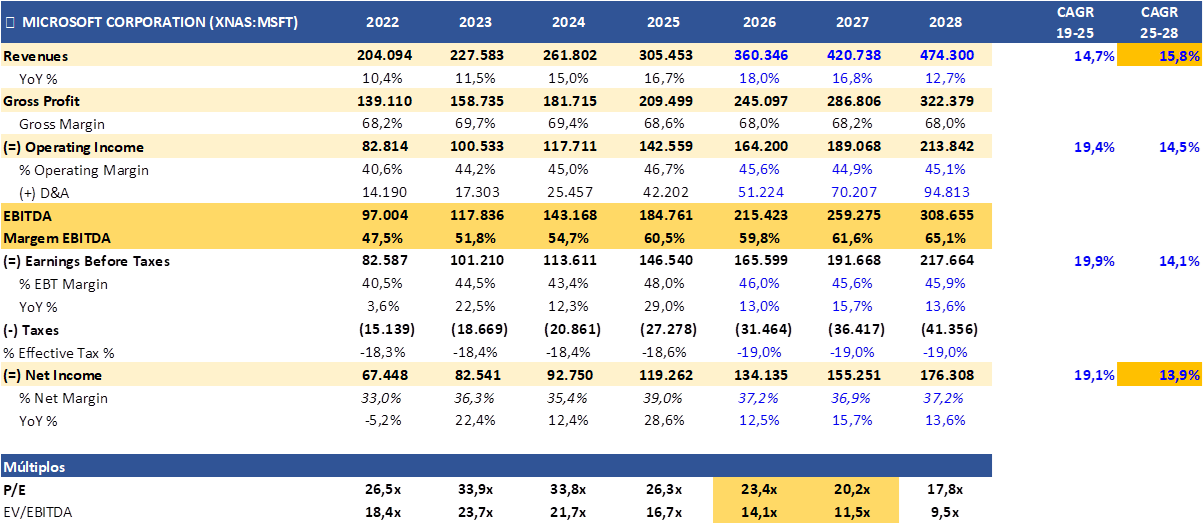
- Valuation: With Microsoft heading towards a Net Income of about USD 200 bi (our estimate), a 20x multiple* would value Microsoft at USD 4 tri justified value in 2029, earning at least a double digit return with 1-2% of dividends (already revised down after the capex boom). Se more about this below.
Therefore we are completely buyers of Microsoft in the USD 400 price range!

Of course we should be aware of the many risks involved in the case. Below our list of main concerns (not extensive):
- What is the future of OpenAI relationship after 2030 when OpenAI should start fullfilling Oracle contracts?
- Will Productivity Software disapear or evolve in more powerfull AI versions? Who would be better positioned to deliver this solutions?
- Who would be better positioned to develop and distribute an AI Operating System for PCs?


Microsoft FY 2Q26 Conference Call
Here is an extensive analysis of the company’s performance, strategic direction, and management’s responses to investor questions in FY 2Q26 (CY 4Q25) Earnings Call:
1. Executive Financial Summary
Microsoft delivered strong results, exceeding expectations on top and bottom lines despite significant investments in AI infrastructure.
- Total Revenue: USD 81.3 billion, up 17% year-over-year (15% in cc).
- Earnings Per Share (EPS): USD 4.14, up 24% year-over-year.
- Operating Income: Increased 21% to roughly USD 38 billion.
- Microsoft Cloud Revenue: Surpassed $50 billion for the first time ($51.5 billion total), growing 26% year-over-year.
- Commercial Bookings: Increased 230% (228% constant currency), largely driven by a massive, multi-year commitment from OpenAI and a commitment from Anthropic.


2. Strategic Pillars: The “Three Layers” of the Tech Stack
CEO Satya Nadella structured the company’s strategy around three key layers: the Cloud/Token Factory, the Agent Platform, and High-Value Agentic Experiences.
Layer 1: Cloud & Token Factory (Infrastructure)
- Capacity Expansion: Microsoft added nearly 1 gigawatt of capacity in this quarter alone. They are building “AI super factories,” such as the Fairwater data center connecting Atlanta and Wisconsin via an AI WAN.
- Silicon & Hardware Innovation:
- Maia 200 Accelerator: Brought online this week, delivering 10+ petaflops at FP4 precision with over 30% improved TCO compared to the latest generation hardware.
- Cobalt 200 CPU: Delivers over 50% higher performance compared to the first generation.
- Efficiency Goal: The primary metric is optimizing “tokens per watt per dollar”.
- Sovereignty: Expanded data center investments in 7 countries to support local data residency and sovereignty needs.
Layer 2: The Agent Platform
- Foundry & Models: Microsoft offers the broadest selection of models, recently adding GPT-5.2 and Claude 4.5. Over 1,500 customers use both Anthropic and OpenAI models on Foundry. [Interesting to see the open approach of Azure!]
- Fabric & Data: Microsoft Fabric’s annual revenue run rate is now over $2 billion, with revenue up 60% year-over-year.
- Agent Control: Introduced “Agent 365” to extend governance, security, and identity controls to agents, with partners like Adobe, SAP, and ServiceNow integrating it.
Layer 3: High-Value Agentic Experiences
- Microsoft 365 Copilot:
- Seat Growth: Paid seats grew over 160% yoy.
- Adoption: 15 million paid seats total. Daily active users increased 10x yoy.
- Large Deals: The number of customers with over 35,000 seats tripled yoy. Publicis alone purchased over 95,000 seats.
- GitHub Copilot: Subscribers: 4.7 million paid subscribers, up 75% yoy.
- Security Copilot: Rolling out to all E5 customers; 24 billion Copilot interactions were audited by Purview this quarter.
- Healthcare: Dragon Copilot helped document 21 million patient encounters, up 3x yoy.
3. Segment Performance Breakdown
Productivity and Business Processes
- Revenue: $34.1 billion, up 16%.
- Highlights: M365 Commercial Cloud revenue grew 17%. Dynamics 365 grew 19%. M365 Consumer Cloud revenue grew 29%.
Intelligent Cloud
- Revenue: $32.9 billion, up 29%.
- Azure: Revenue grew 39%, slightly ahead of expectations.
- Constraints: Demand continues to exceed available supply.

More Personal Computing
- Revenue: $14.3 billion, down 3%.
- Gaming: Revenue decreased 9%, with Xbox content and services down 5% due to first-party content performance.
- Windows: Windows 11 reached 1 billion users. OEM revenue grew 5%.


4. Key Analyst Questions & Management Responses
The Q&A session focused heavily on Capital Expenditures (CapEx), Return on Investment (ROI), and the relationship with OpenAI.
Concern 1: CapEx vs. Revenue ROI
- Question: Investors noted that CapEx is growing faster than Azure revenue, raising concerns about the long-term ROI of this spending.
- Management Response:
- Allocated Capacity: CFO Amy Hood explained that if all new GPU capacity in Q1/Q2 had been allocated solely to Azure, Azure growth would have exceeded 40%.
- [Its not a surprise that Microsoft rather allocate in its own solutions with almost 60% margins vs the 45-50% of Azure! So Azure growth is not the only metric in Microsoft!]
- Internal Allocation: CapEx is also fueling M365 Copilot, GitHub Copilot, and R&D, not just Azure.
- Supply Constrained: The company remains supply-constrained; they are balancing immediate Azure demand with long-term R&D and internal product growth.
Concern 2: Asset Useful Life vs. Contract Duration
- Question: Hardware is capitalized over 6 years, but the average commercial Remaining Performance Obligation (RPO) duration is only 2.5 years. Is there a risk of mismatched assets and revenue?
- Management Response:
- Pre-sold Capacity: Most GPUs being purchased are already contracted for their entire useful life, mitigating this risk.
- Efficiency Gains: Margins on these assets actually improve over time due to efficiency gains and software optimizations.
Concern 3: OpenAI Exposure
- Question: With 45% of the commercial RPO balance tied to OpenAI, is there concern about exposure and durability?
- Management Response:
- Broad Portfolio: The remaining 55% of the backlog ($350 billion) is diversified across industries and grew 28%.
- Partnership Value: Management views the OpenAI relationship as a key strategic asset, positioning Microsoft as the provider of scale for a leading AI entity.
Concern 4: Silicon Strategy (Maia vs. Nvidia)
- Question: How does the performance of Maia 200 (superior to some competitors) impact the long-term silicon strategy and margins?
- Management Response:
- Fleet Flexibility: Microsoft aims for a heterogeneous fleet (Nvidia, AMD, and First-Party) to ensure the best TCO at any given time.
- Optimization: Vertical integration allows them to optimize the entire stack (networking, memory, silicon) for specific workloads like GPT-5.2.
5. Outlook & Guidance (Q3 FY26)
- Total Revenue: Expected between $80.65 billion and $81.75 billion (15% to 17% growth).
- Azure Growth: Expected to be 37% to 38% in constant currency.
- CapEx: Expected to decrease sequentially due to normal variability in cloud infrastructure builds and finance lease timing.
- Margins: FY26 operating margins are now expected to be up slightly year-over-year.
- Hardware Impact: Rising memory prices may impact Windows OEM, on-premises server markets, and CapEx.
Microsoft FY 2Q26 Earnings and Model Update
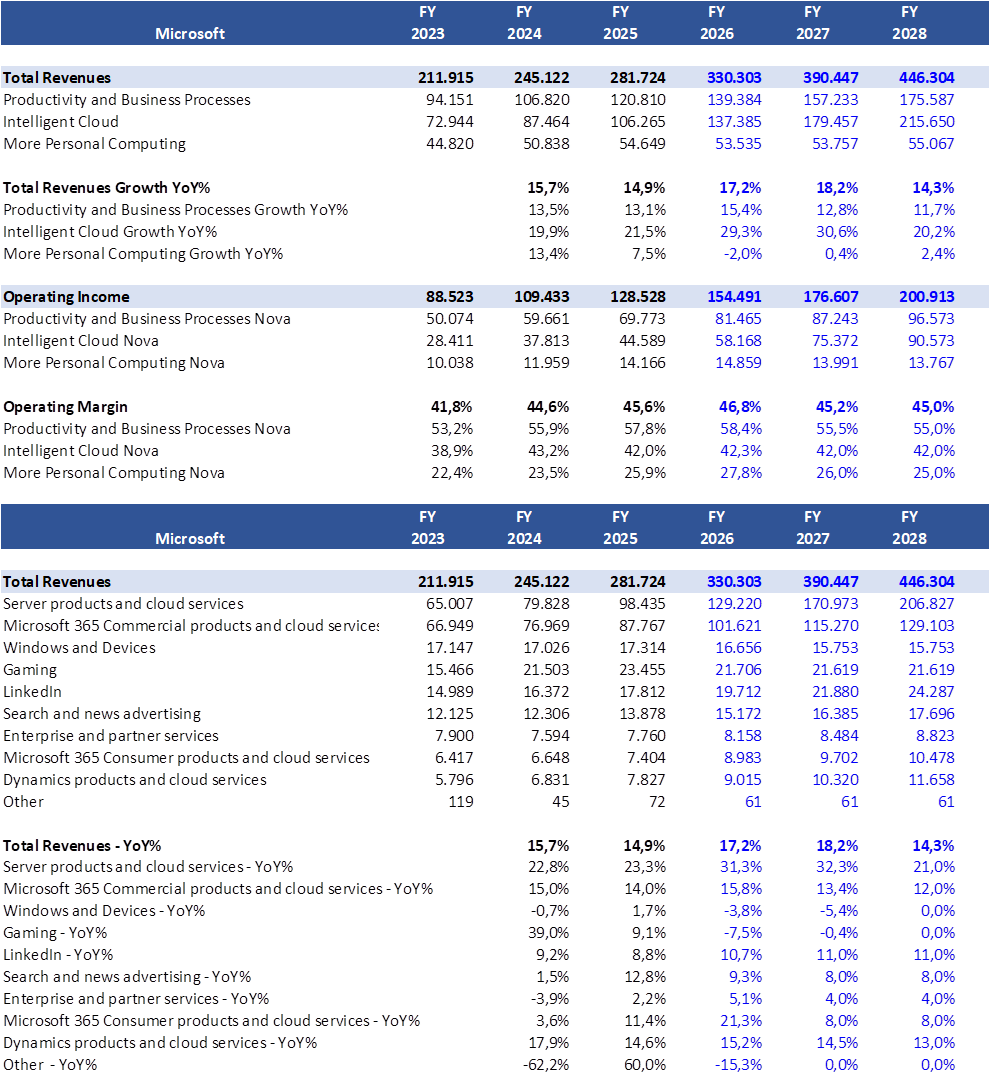
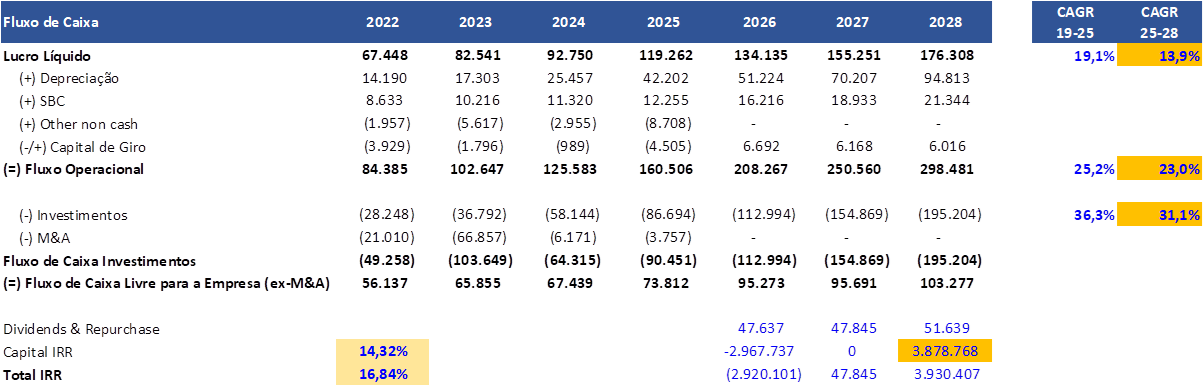
Below for subscribers follow the comparative with our numbers and our model and expectation for 2026 trough 2028:
- Earnings Numbers Commentary
- Model Update
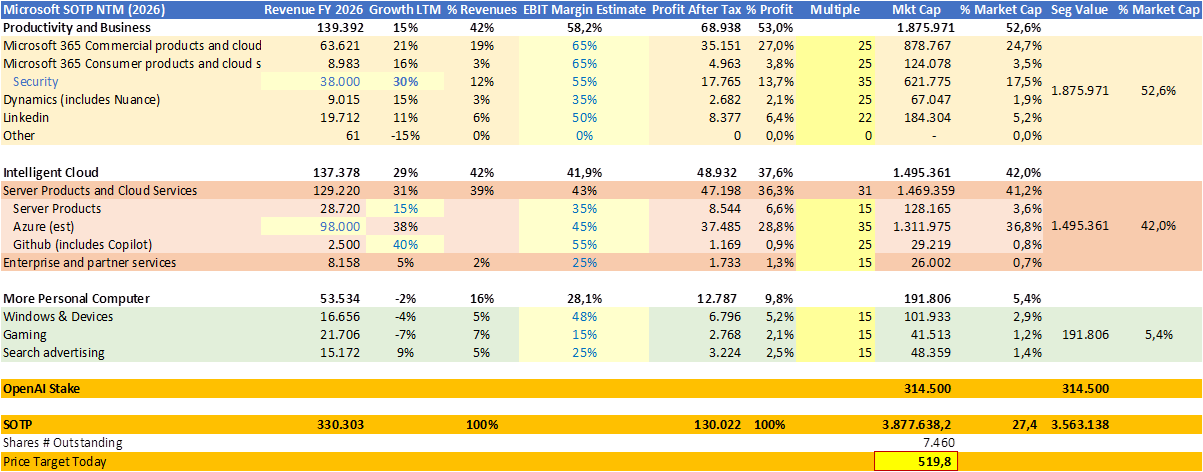
- Microsoft Sum of the Parts (Its hot!)
Microsoft FY 2Q26 Earnings
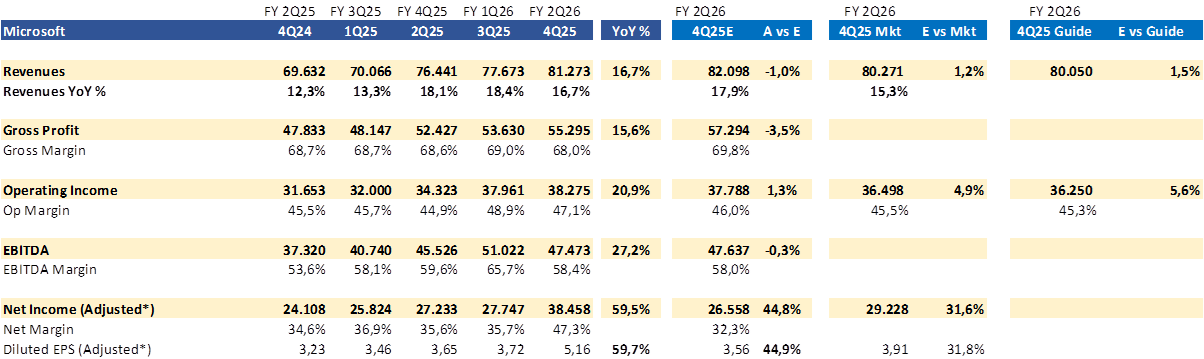
Microsoft delivered 16,7% of revenues growth, +USD 12,3 bi in 12 months to USD 81,9 bi QUARTERLY.
Revenues came 1% above Market estimates (as seen in the chart above, we generally expect Microsoft will beat by 1-2pp).
Operating Income came 5%+ above market and guidance and came 1,3% above ours.
Operating Margin came at 47,1% againts 45,3% guided and 46% ours! For us this was the signal, showing impressive scale advantages and operational leverage.
When we look at Net Income, we should consider that Microsoft market a Net Asset gain in OpenAI investment that amount to almost USD 10 bi in “other income (expenses)”.
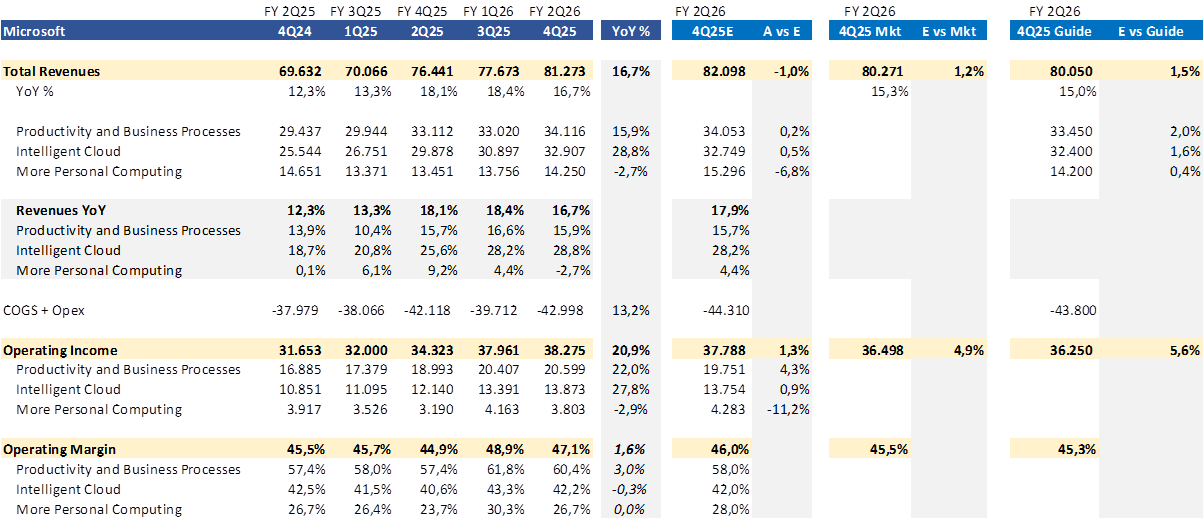
Looking by segment, we clearly see that the two engines of value in Microsoft are the Productivity Software Business and Azure. The MPC didn’t came good, which have a smaller impact in Microsoft overall valuation.
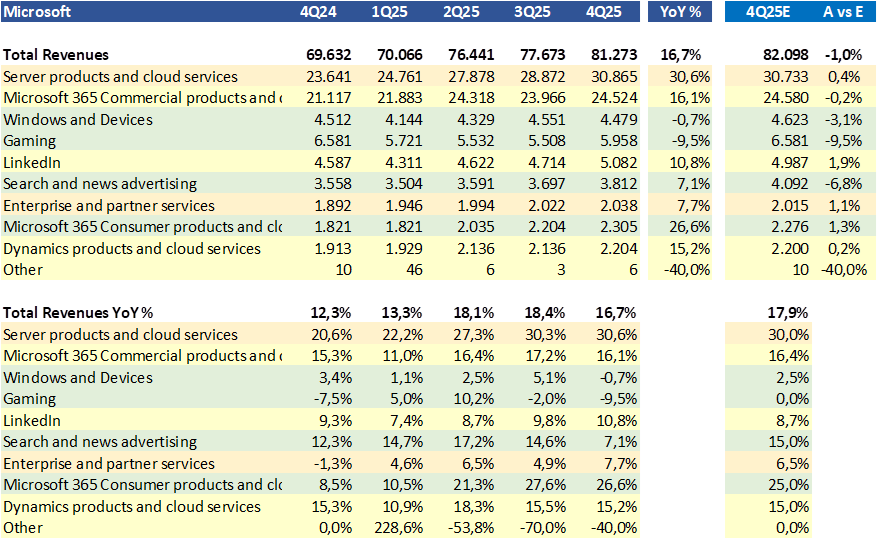
The big bad ugly number that the scared investors was the USD 29 BILLION in cash outflows for investments, a 89% Growth over last year and 50% over last quarter. Jensen must be really happy about that!
But, come on. WE ARE SEEING an acceleration in growth and from our channel checks, this growth should continue given strong fundamentals of cloud migrations, increasing cybersecurity and database investments, business modernization using Agents applications.
I saw a nice article that captured the idea: “If SaaS is dead, Microsoft will win”, because Microsoft is the cloud for the AI that is developing new systems lightning fast as we speak.
The management also mentioned again and again that they are at full capacity, and this is a picture that already last for some quarters, so we clearly see value generation that will justify managements decision in the long run.
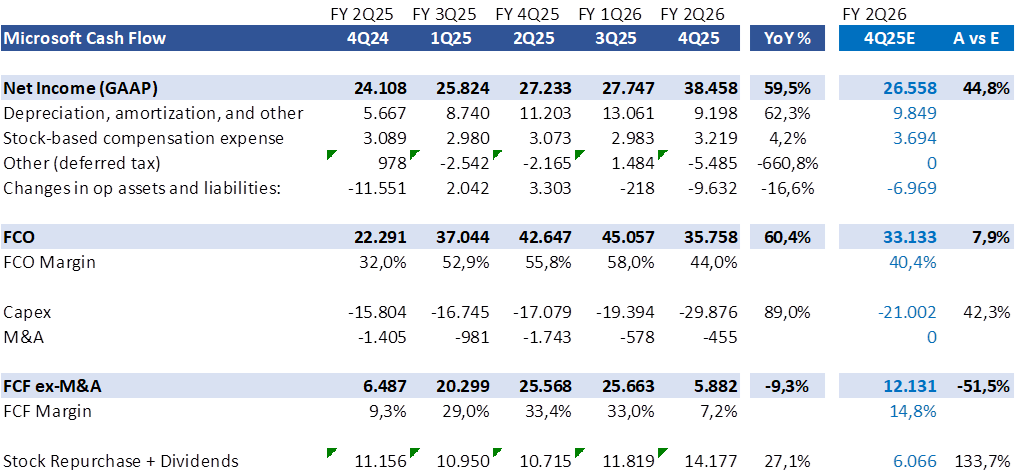

Microsoft Expectations Update 2026-2028
Based on the company call and our analysis, follow our 2026-2028 expectations.
Microsoft Sum of The Parts
Sum of the Parts: How much we value Infrastructure Platform vs the Software Solutions?
Thank You,
Core Value Research


